Scale and reach
Drawing from schools across every sector gives a picture that reflects the diversity of children in New South Wales, not just a narrow sample.
Home / The Survey
A statewide survey that lets children speak for themselves about how they are growing, completed during their middle primary-school years across New South Wales.
The survey
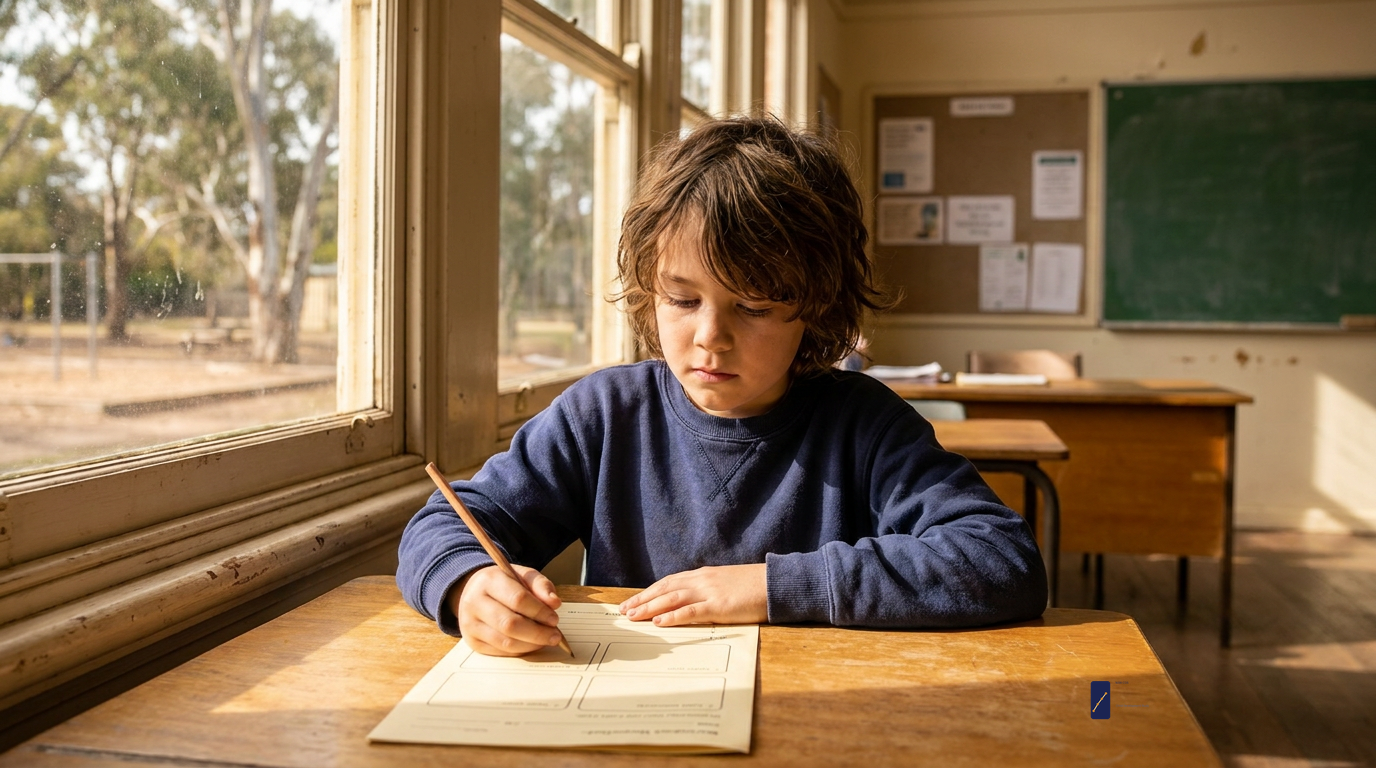
Administrative records describe what happens around a child. The Middle Childhood Survey adds something records cannot: the child's own account of their world. Fielded across NSW government, Catholic and independent schools, it reached students at a pivotal stage, around the middle of primary school, when many capacities for learning and relationships are taking shape.
The survey was designed to be age-appropriate and inclusive, so that a wide range of children could take part and be understood. Together with the linked population data, it gives the study a uniquely complete view of childhood across an entire generation.
A child is more than the records kept about them. The survey makes sure their perspective is part of the science.
What it measures
The survey looks at the whole child, across the interconnected areas where development happens.
Friendships, belonging and getting along with others.
Feelings, confidence and coping with ups and downs.
Thinking, learning and curiosity about the world.
Health, activity and physical wellbeing.
Communication and the words to express ideas.
Why these voices count
Drawing from schools across every sector gives a picture that reflects the diversity of children in New South Wales, not just a narrow sample.
Measuring at one shared stage of childhood creates a clear reference point that later data can be compared against as children grow.
Children's self-reports help explain patterns seen in administrative data, turning numbers into something researchers can interpret.
Aboriginal-led component
Ngadhuri-nya is the study's Aboriginal-led strand, focused on the wellbeing of Aboriginal children and communities. Its name carries a sense of caring and looking after, a fitting expression of its purpose.
The component is designed and guided together with Aboriginal researchers, families and community partners. It works from the principle that research about Aboriginal children should be shaped by Aboriginal people, with knowledge held and benefits returned to community.
Through this strand, the study seeks to understand strength and resilience in Aboriginal childhoods on their own terms, and to make sure findings respect cultural context and support self-determination.
In the bigger picture
The survey is not a standalone snapshot. Its real value comes when it is read alongside the study's linked records and across the wider span of follow-up, from the early years into adolescence and adulthood.
By joining what children tell us with what the records show, the study can ask deeper questions about cause, timing and change, the kinds of questions that only a long view can answer.
Read the methodology